
2026-10-07 · Kekoa Kapule
Changing Your AC Filter In Hawaii Humidity
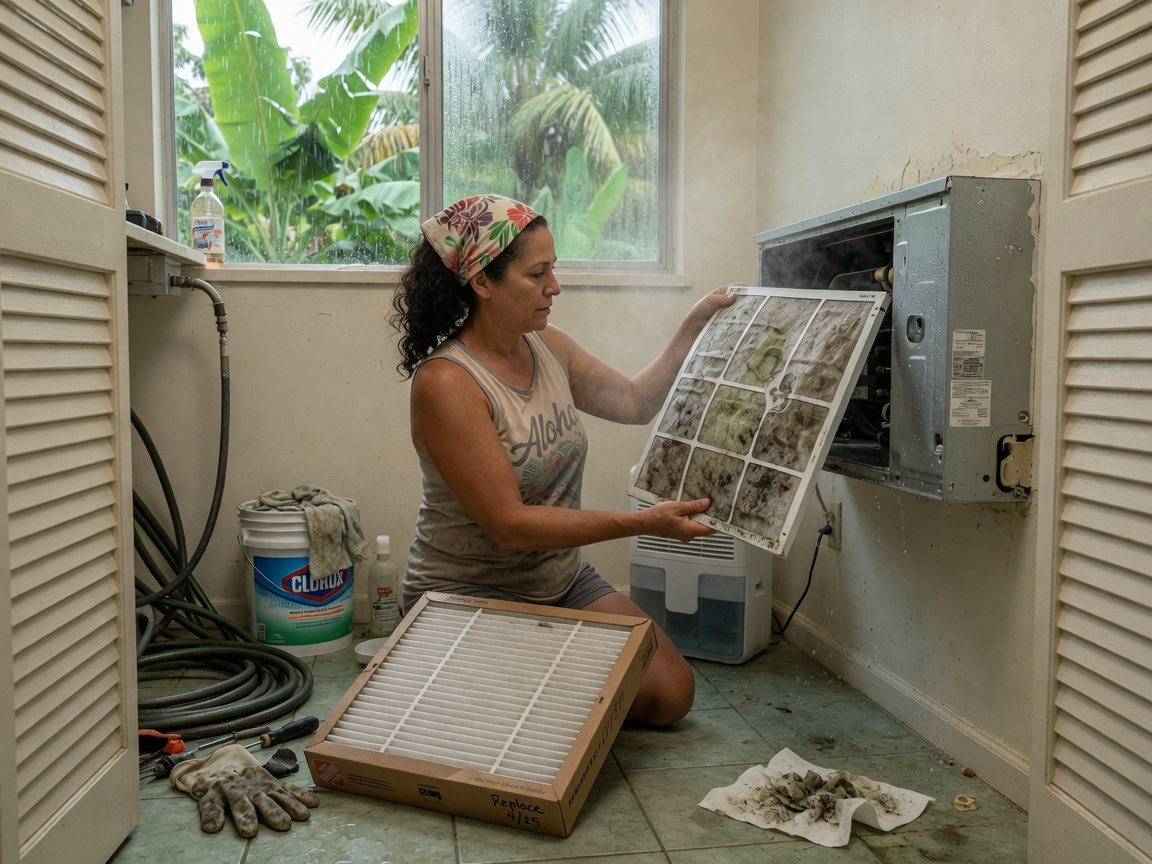
In Hawaii humidity, change your AC filter every 30 to 45 days rather than the standard 90-day interval. Persistent moisture in the air loads filters with dust and mold spores faster, especially along the Waianae coast where trade winds carry salt and fine particles inland. Homeowners who wait longer often notice reduced airflow and higher energy use during the wetter months from November through March.
How Hawaii Humidity Accelerates Filter Clogging
Hawaii maintains relative humidity levels between 60 and 80 percent year-round, with Waianae seeing spikes near the shoreline. This constant moisture turns ordinary household dust into a sticky coating that clogs pleats quickly. Coastal homes also pull in salt-laden air that mixes with the dust, creating a heavier load on the filter media. Residents in older single-wall construction common throughout the Leeward coast report filters darkening within three weeks during peak humidity. The result is restricted airflow that forces the AC to run longer cycles, raising monthly bills and stressing the blower motor. Checking the filter monthly with a flashlight reveals when the surface turns gray or feels damp, signaling replacement is due before performance drops.
Step-by-Step Guide to Changing Your Filter
Turn off the thermostat and locate the filter slot, usually behind a return-air grille in a hallway or closet. Note the current size printed on the frame edge, typically 16x20x1 or 20x25x1 in Waianae tract homes. Slide out the old filter and hold it to light to confirm heavy loading. Insert the new filter with arrows pointing toward the blower. Snap the grille closed and restart the system. Perform this task at the same time each month to build a habit that matches local humidity patterns. Keep a spare box of the correct size on hand so replacements happen without delay when the current filter shows early clogging.
Signs Your Filter Needs Replacement Sooner
Watch for weak airflow from vents or longer run times before the home reaches set temperature. In Waianae homes, a musty smell when the AC starts often points to moisture trapped in a loaded filter. Ice forming on the evaporator coil or water dripping from the indoor unit signals restricted return air caused by a clogged filter. Dust settling on furniture within days of cleaning also indicates the filter is no longer capturing particles effectively. These symptoms appear faster here than in drier climates because high humidity keeps the media damp and attractive to additional debris.
Pairing Filter Changes with Other Maintenance
Regular filter swaps work best alongside AC Maintenance visits that include coil cleaning and drain-line checks. Homes near the ocean benefit from the insights in How Salt Air Corrosion Affects AC Units In Waianae, which explains how salt accelerates wear on metal components when airflow is already restricted. Some Waianae households add Dehumidifier Installation to lower indoor moisture and extend filter life. Tracking replacement dates in a simple log helps identify whether seasonal patterns or nearby construction dust require even shorter intervals.